
By Fedelis Fengu
The federal government shutdown has now entered its third week, with ripple effects spreading across New York City from federal employees missing paychecks to families facing the possibility of delayed food assistance.
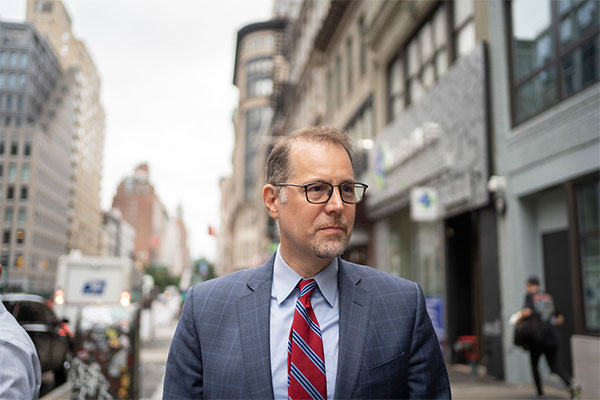
In a message sent to New Yorkers this week, Manhattan Borough President Mark Levine addressed the growing hardship caused by the impasse, offering both guidance and hope as the shutdown drags on with no immediate end in sight.
“Federal employees continue to work without pay, while SNAP benefits, which provide food assistance to hundreds of thousands of households across New York City, are at risk of delay starting November 1 unless federal funding is restored,” Levine wrote in his citywide email.
The shutdown stems from a stalemate in Congress over the passage of a federal budget. Lawmakers have failed to agree on key spending priorities, with disputes centering on domestic spending cuts, border security funding, and aid allocations to states and international programs.
Without a funding agreement, the federal government ran out of money to operate, forcing many agencies to halt or scale back operations. Hundreds of thousands of federal workers — including air traffic controllers, TSA officers, and staff at national parks and federal offices — have been furloughed or required to work without pay.
In New York, where thousands of residents rely on federal programs like SNAP (food assistance), Section 8 housing, and federal childcare subsidies, the effects are being felt in homes, workplaces, and communities across the five boroughs.
Recognizing the growing strain, Borough President Levine is urging residents to stay informed and access available resources.
He highlighted several lifelines for those affected:
Food Assistance: Use the NYC Food Finder or Food Bank for NYC Food Map to locate food pantries and free meal services.
SNAP Recipients: Monitor updates from the NYS Office of Temporary and Disability Assistance (OTDA) via ACCESS HRA, myBenefits, or the ebtEDGE app. Unused benefits remain active beyond November 1.
Federal Employees: The Hebrew Free Loan Society (HFLS), in partnership with Levine’s office, is providing interest-free loans up to $7,500 to low- and moderate-income federal workers, with repayment delayed until four weeks after the government reopens. “These are our neighbors and public servants who keep essential operations running even as their pay is withheld,” Levine said. “We have to step up as a city and take care of one another.”
In coordination with City Hall, Levine’s office is working to map the local impact of the shutdown and identify neighborhoods most at risk. The Manhattan Borough President has also joined other local officials in calling on Congress and the White House to immediately pass a clean budget resolution to restore funding.
Levine emphasized that the city cannot replace federal funding but can mitigate harm through targeted relief efforts, collaboration with nonprofits, and public information campaigns. “We can’t solve Washington’s gridlock,” Levine said, “but we can make sure no New Yorker faces hunger, eviction, or hardship alone.”
The shutdown, now entering Day 21, marks one of the longest in recent years. Economists warn that if it continues beyond early November, billions in economic activity could be lost, with New York’s tourism and service industries among the hardest hit.
Levine’s message, however, struck a note of unity amid frustration: “We’ve weathered challenges before — and we’ll get through this one, together.”